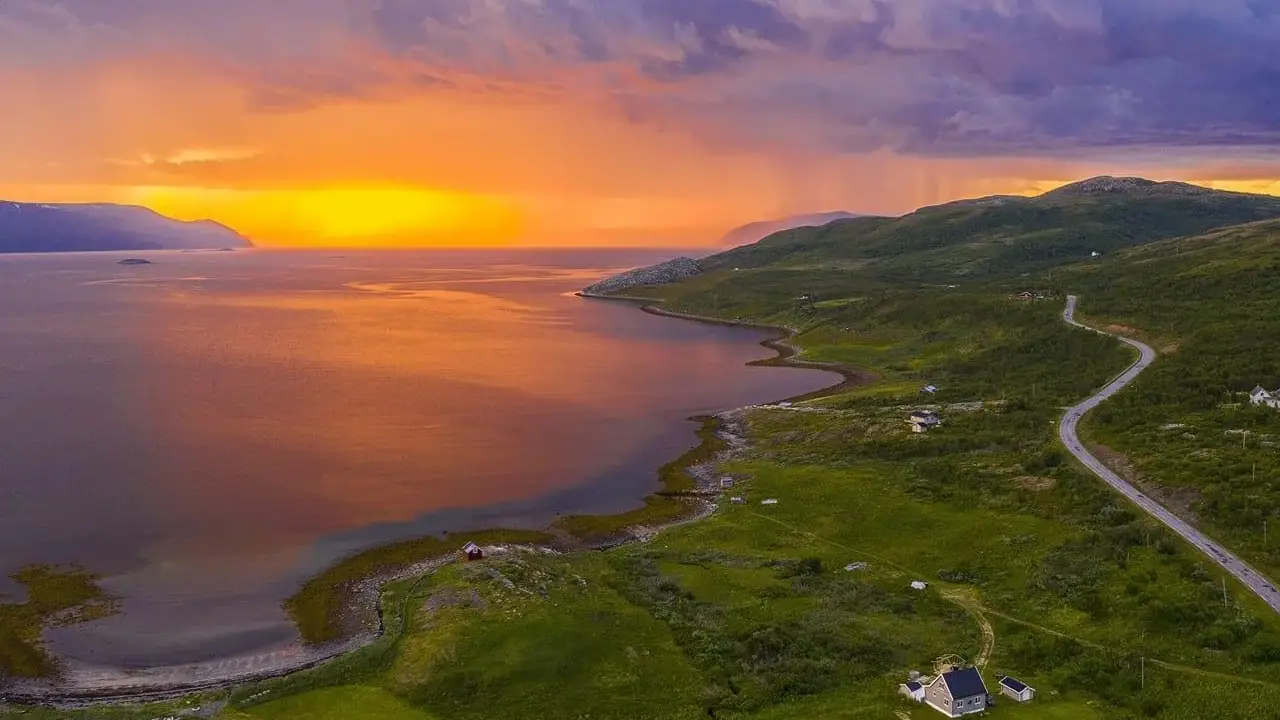
Photo: Frank Martin Ingilæ
For salmon, the fjord is not the most important habitat. Norway has many fjords that are several hundred meters deep. Young salmon on their way to the sea, and adult salmon on their way back to the river where they were born, only use the upper meters. The water here is often brackish.
Norway has many fjords that are several hundred meters deep. Young salmon on their way to the sea, and adult salmon on their way back to the river where they were born, only use the upper meters. The water here is often brackish water. This means that it is less salty than the water in the sea, and more salty than fresh water. The water temperature and salt content in the water can vary from year to year and from fjord to fjord. The surface water in the fjords is quite similar throughout the year – if we compare it with the conditions in the watercourses.
The young salmon (smolt) migrate out in the spring, with camouflage adapted to life in the sea. They have a dark back and a white belly – almost like a herring. The dark back makes it difficult for fish-eating birds to see them as they swim over deep, dark fjords. The light belly and light sides camouflage them from predatory fish that come from below and look up at the light water surface.
The smolt only stay in the fjord for a few days. They swim purposefully out towards the open sea. The most important food for smolt in the fjord is fish fry. Adult salmon on their way to their feeder river to spawn rarely stop to eat in the fjord.
The fish farms along the coast have a thousand times more fish than we have wild salmon. The parasite sea lice likes that. Sea lice are transmitted from farmed salmon to wild salmon and can harm and kill smolts on their way to the sea.
The Norwegian Parliament has given special protection to wild salmon in 29 fjords. These are called national salmon fjords, and salmon farming is not allowed here. Tanafjorden and Namsenfjorden are two such national salmon fjords. You can read more about national salmon rivers and fjords here .
Water consists of a small amount of salt (NaCl) in addition to molecules composed of two hydrogen atoms and one oxygen atom. The proportion of salt can vary from less than 0.5% (freshwater) to 3.5% (seawater). Salt makes water heavier.
On the surface of the earth there is often a thin layer of water with little salt. It is a mixture of seawater and fresh water. We call this water brackish water. Further down there is "pure" seawater.
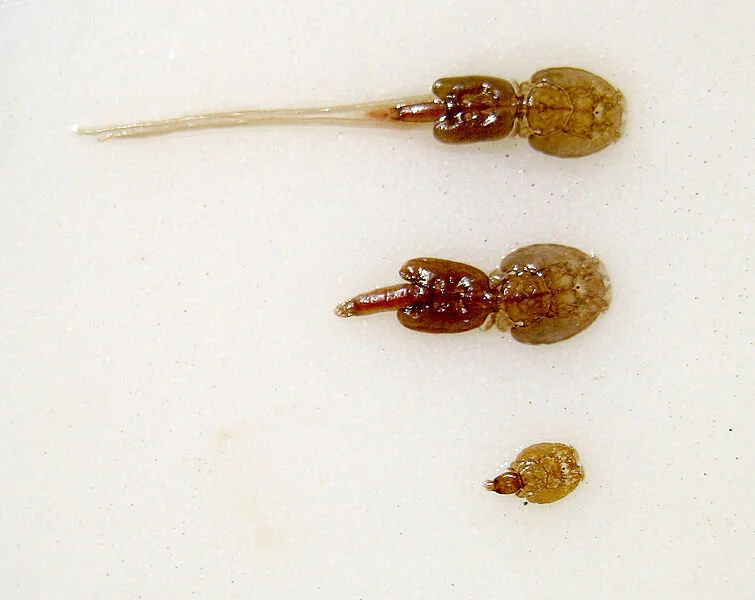
Top: adult female with egg strings. Middle: adult female without egg strings. Bottom: young louse. Photo: Thomas Bjørkan, Norwegian Aquaculture Center, Brønnøy.
Sea lice are crustaceans that live on salmonids (salmon, trout and char). They do not thrive in fresh water and therefore fall off the salmon in the river. If the salmon in the river have sea lice, it indicates that they have recently come from the sea. Laboratory experiments show that sea lice can survive on the fish for up to 14 days in fresh water.
Kvåsveien 1500
4588 Kvås - Lyngdal
Company No. 915 380 972
The wild ox is part of our history and culture.
.png)