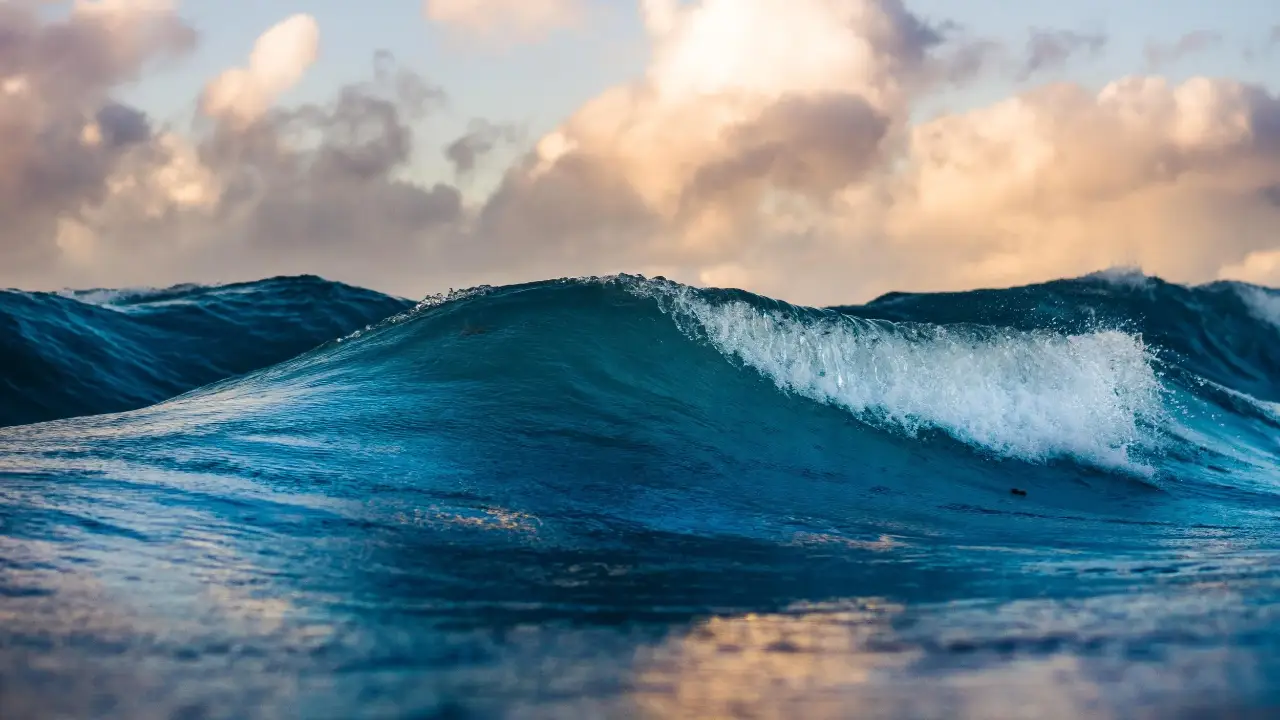
The Atlantic Ocean is very big! The journey from Norway to North America is more than 4,000 kilometers long. The average depth is a full 4,000 meters. For us humans, the sea is deadly salty, but not for wild salmon. It eats big there.
Wild salmon migrate in the ocean for one to five years before returning to the river where they were born. The youngest are small, and the oldest weigh more than 25 kilograms. The largest have a large mouth and can eat large prey, such as adult herring. The smaller ones have small mouths and eat a lot of fish larvae of capelin and sandeel. The fact that there is a lot of prey in the ocean is important for the salmon. This allows both large and small wild salmon to eat what gives them the most energy. In winter, there is less prey for wild salmon in the surface layers. Then the salmon can dive several hundred meters down in search of food.
A small wild salmon in the ocean is an attractive prey for many. Many fish species, seals, whales and birds like to eat wild salmon. Therefore, it is important to grow quickly and become too big to be eaten. Large wild salmon do not have many enemies, except for seals and whales.
Wild salmon in the ocean have camouflage. The light belly and light sides make the salmon difficult to see from below and up against the light water surface. The dark back makes it difficult for fish-eating birds to see the wild salmon as it swims across the deep, dark ocean.
Wild salmon in the ocean experience spring, summer, autumn and winter out there. The light varies a lot throughout the year, especially in the north. The surface water temperature is slightly higher in summer and in southern parts of the North Atlantic. The Gulf Stream from the south brings some of the warm water all the way north to Svalbard. In the far north, icy water flows from the Arctic Ocean. The area where the warm water from the Gulf Stream meets the cold ice water is called the polar front. There is extra food for wild salmon here.
Down in the ocean depths, the water can be below 0 degrees. Seawater is salty and only freezes at –1.9 degrees. It is then heavier than warmer water and sinks into the dark depths.
Seawater is toxic to us. If we drink seawater, our blood becomes so salty that our cells dry out. This leads to our slow but sure death. Unlike us, wild salmon manage to get rid of the salt before their blood becomes too salty.
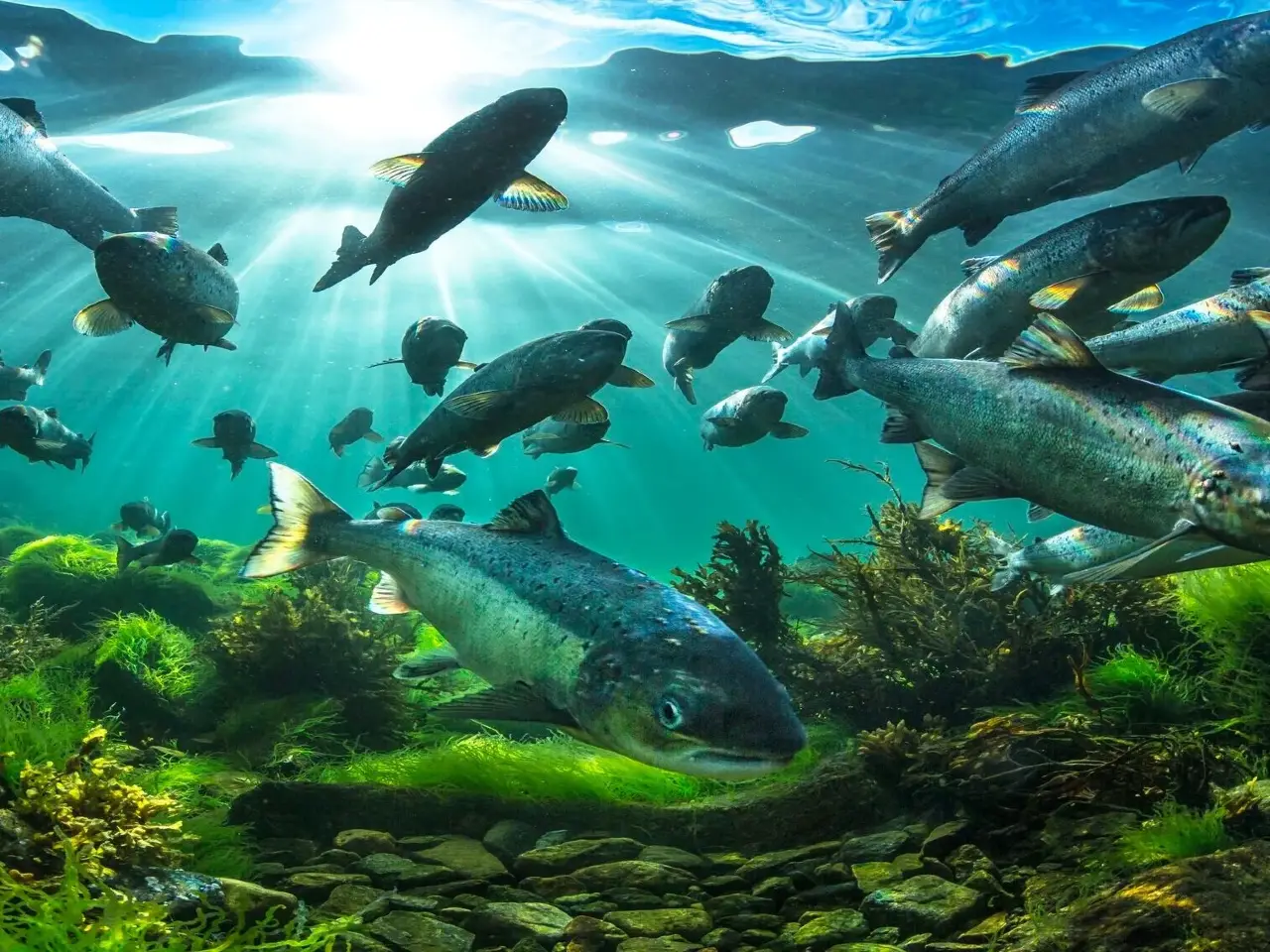
Out in the open ocean, salmon don't have much to orient themselves by. When they start their journey home, they use their internal compass to find their way back to the coast. The last bit, scientists believe, is that salmon use their sense of smell to find the right river.
This bunch is almost there. You can see that it is not that deep where they are swimming. You can also see seaweed, which shows that they are still in the sea. You can also see some sea lice on the salmon. When the salmon comes up the river, the sea lice will die and fall off. Sea lice cannot tolerate fresh water for very long.
Kvåsveien 1500
4588 Kvås - Lyngdal
Company No. 915 380 972
The wild ox is part of our history and culture.
.png)