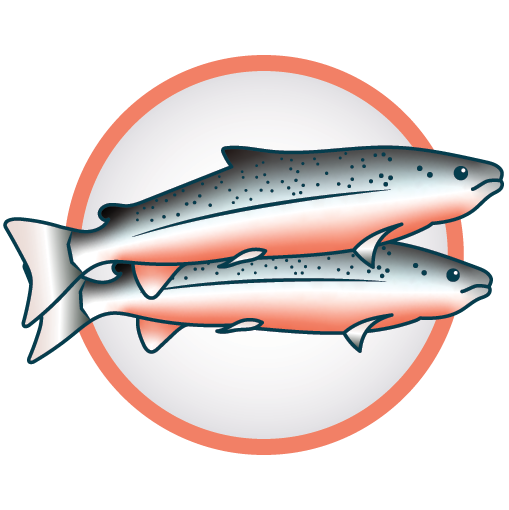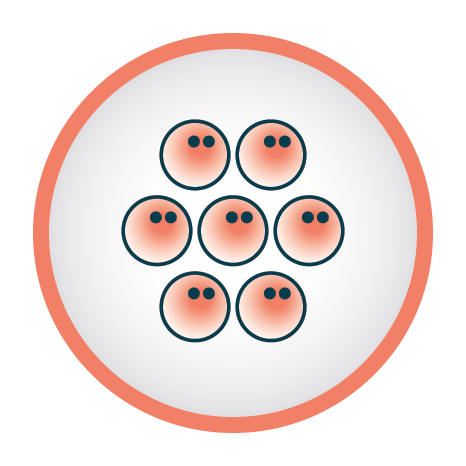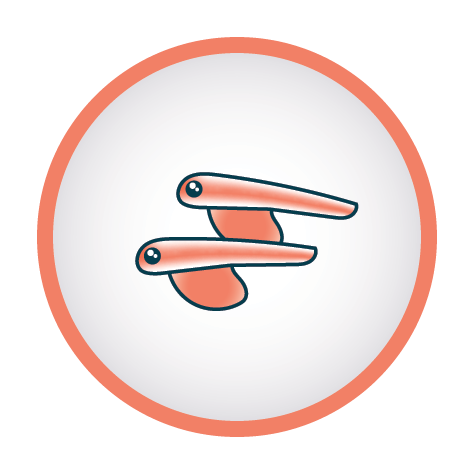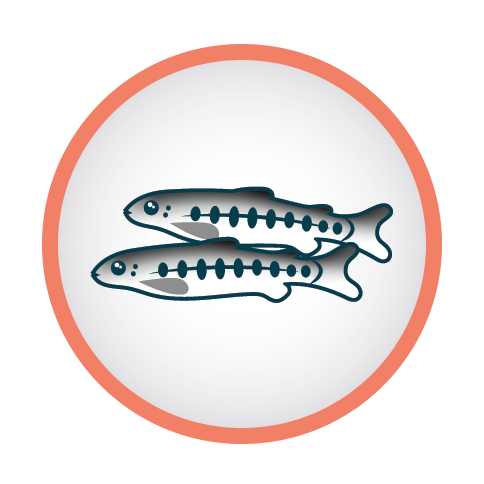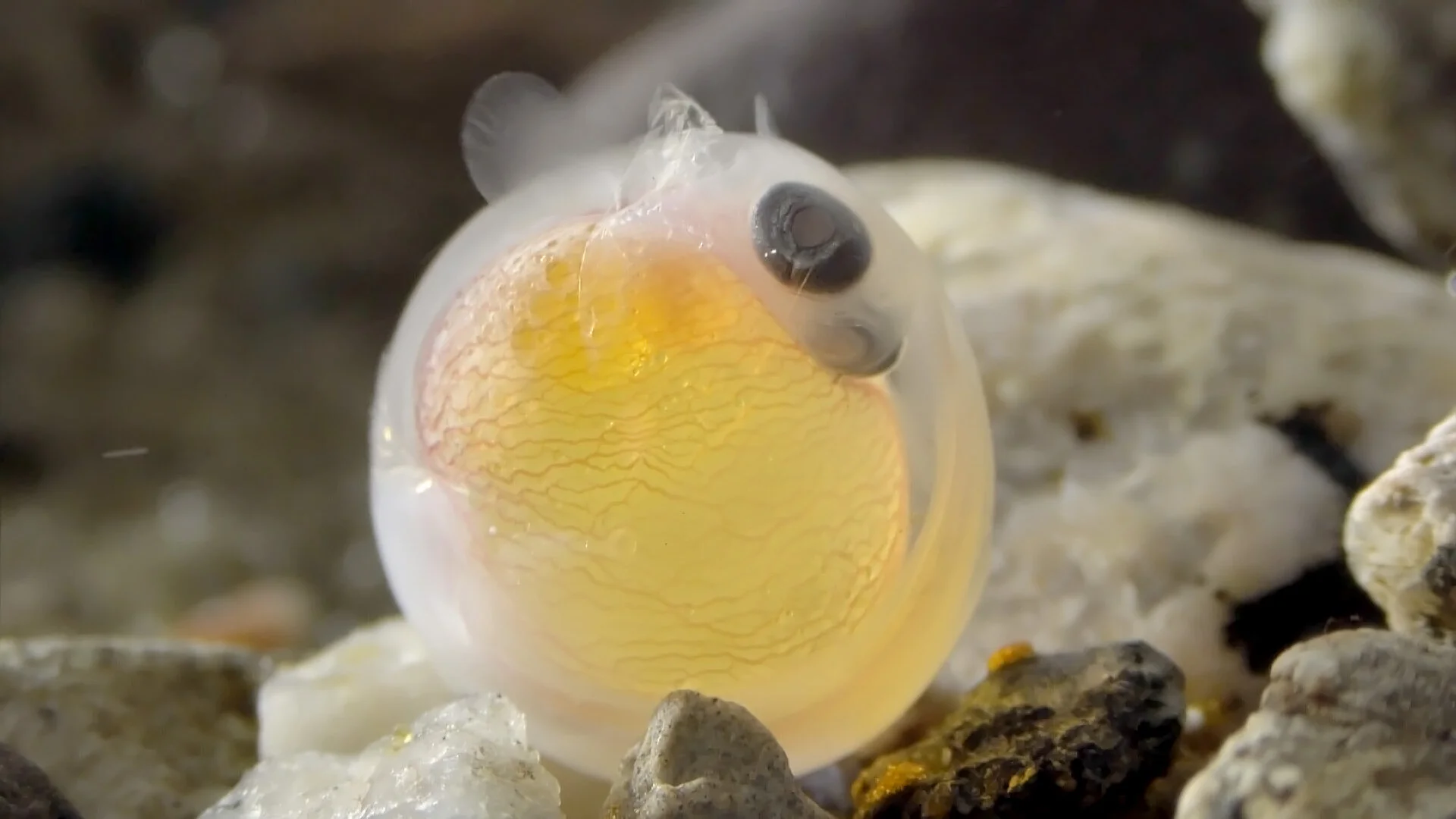
Salmon eggs (roe) hatching. Photo: Arnt Mollan
Salmon roe is round and has a beautiful orange color. For fish eggs, they are large – about the size of small sugar peas. Large salmon have larger roe than smaller salmon. A medium-sized female salmon lays about 1,450 eggs for every kilogram she weighs.
The eggs are laid in a spawning pit, which the female salmon digs. She uses her tail to dig and her anal fin to measure the correct depth. The toughest male salmon is immediately in place and fertilizes the eggs when the female releases the eggs. The female salmon quickly covers the eggs with a layer of gravel. It is important that the gravel is of the right size. There must be enough cavities so that oxygen-rich water can flow in to the eggs. The largest female salmon dig the deepest spawning pits, and the largest male salmon fertilize the most eggs.
The egg shell is transparent and soft. As early as February and March, the eyes of the fry inside the egg are visible. We then call the egg eye eggs. Hatching occurs in early spring. Eggs in rivers in the south of the country hatch before eggs in the north.
Roe is a nutritious food. Roe that is taken by the current and does not end up in the spawning gravel quickly becomes food for birds and other fish. Insect larvae in the gravel eat some of the roe throughout the winter.
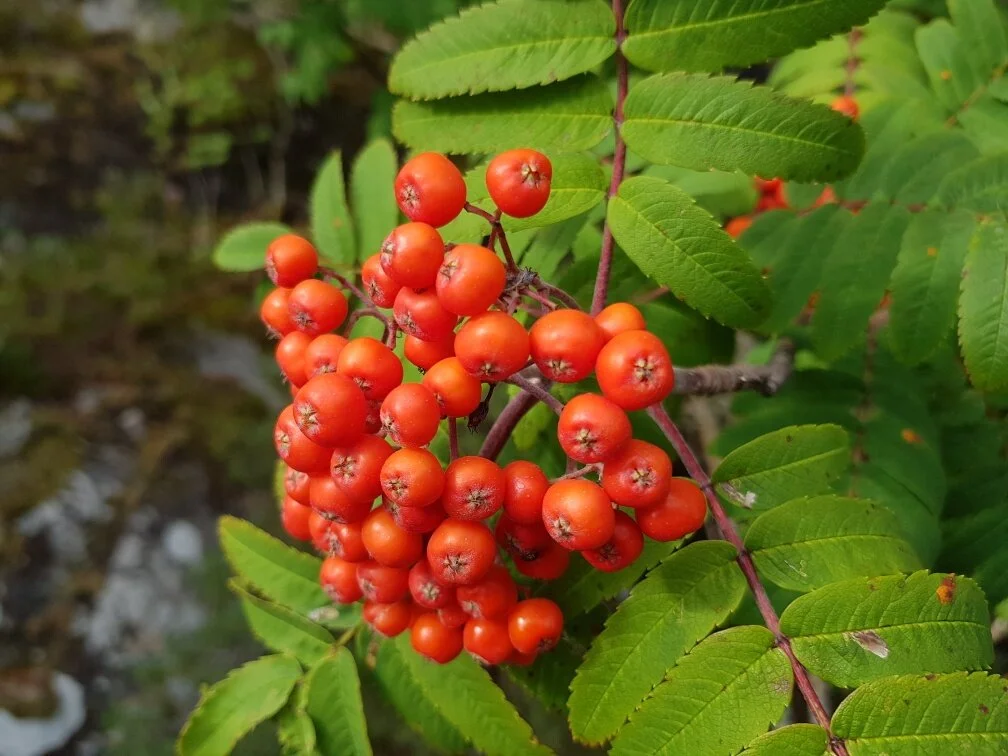
They hang high and are sour - the rowan berries. Photo: Tone Løvold
We often use the word roe instead of egg. Have you seen rowan berries? They are orange and round, and they look quite similar to salmon roe. Did we name salmon eggs after the berries on the rowan tree, or is it the other way around? What do you think?
Kvåsveien 1500
4588 Kvås - Lyngdal
Company No. 915 380 972
The wild ox is part of our history and culture.
.png)