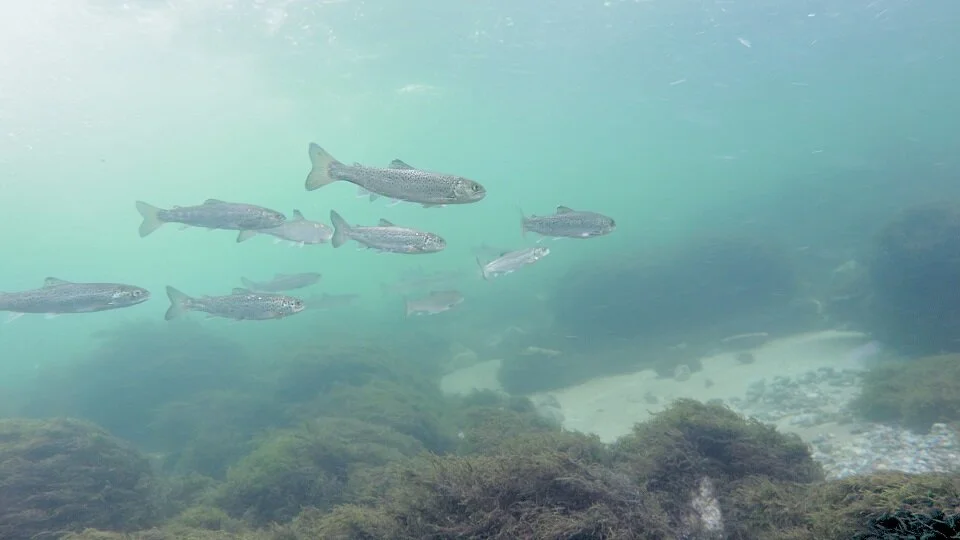
Smoltstim travelling. Photo: Arnt Mollan
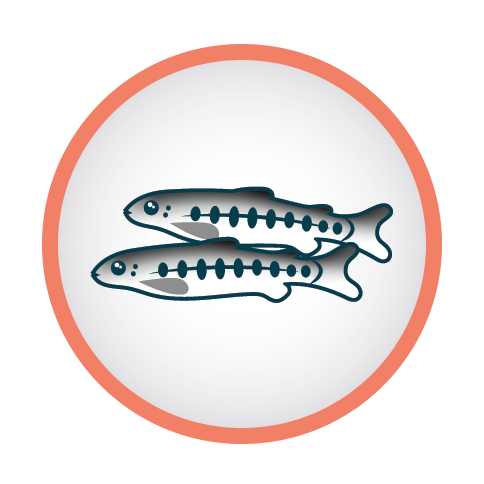
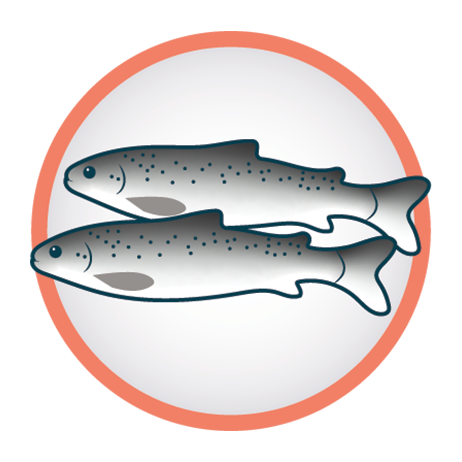
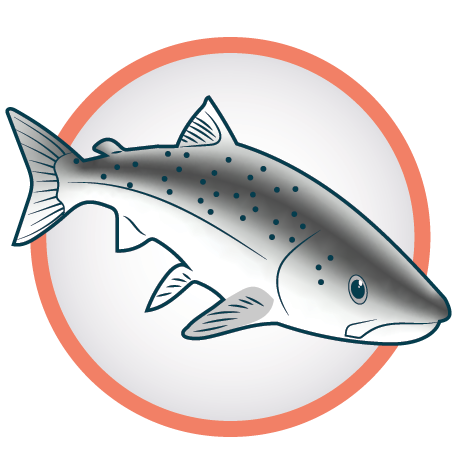
When the pair has become about the same length as a ballpoint pen, we can call it a juvenile. Now the transformation is under way. Major changes occur both outside and inside the body. The pair transforms into smolt, and this is what we call smoltification. Outwardly, it becomes longer, slimmer and shiny. Inside the body, things happen that allow it to live in salt water without drying out. The salt secretes it through the gills and when urinating.
The smolt is now ready for sea. The river current carries it with it down the river. At the bottom of the river, they gather in larger and smaller groups. They never leave the river alone. It is safer to swim several together in shoals. Because they are slim, they can swim fast. Because they are shiny, they become less visible when swimming in clear seawater. And because they are more numerous, it becomes harder for birds and other fish to get hold of them.
The Smoltstimen swims out pretty quickly through the fjord. Some have to go through long fjords, while others have a short way to the sea.
It is spring when the smolt leaves, but the smolt in the south migrates earlier into the sea than the smolt in the north. We still do not know exactly what determines when the smolt leaves the river.
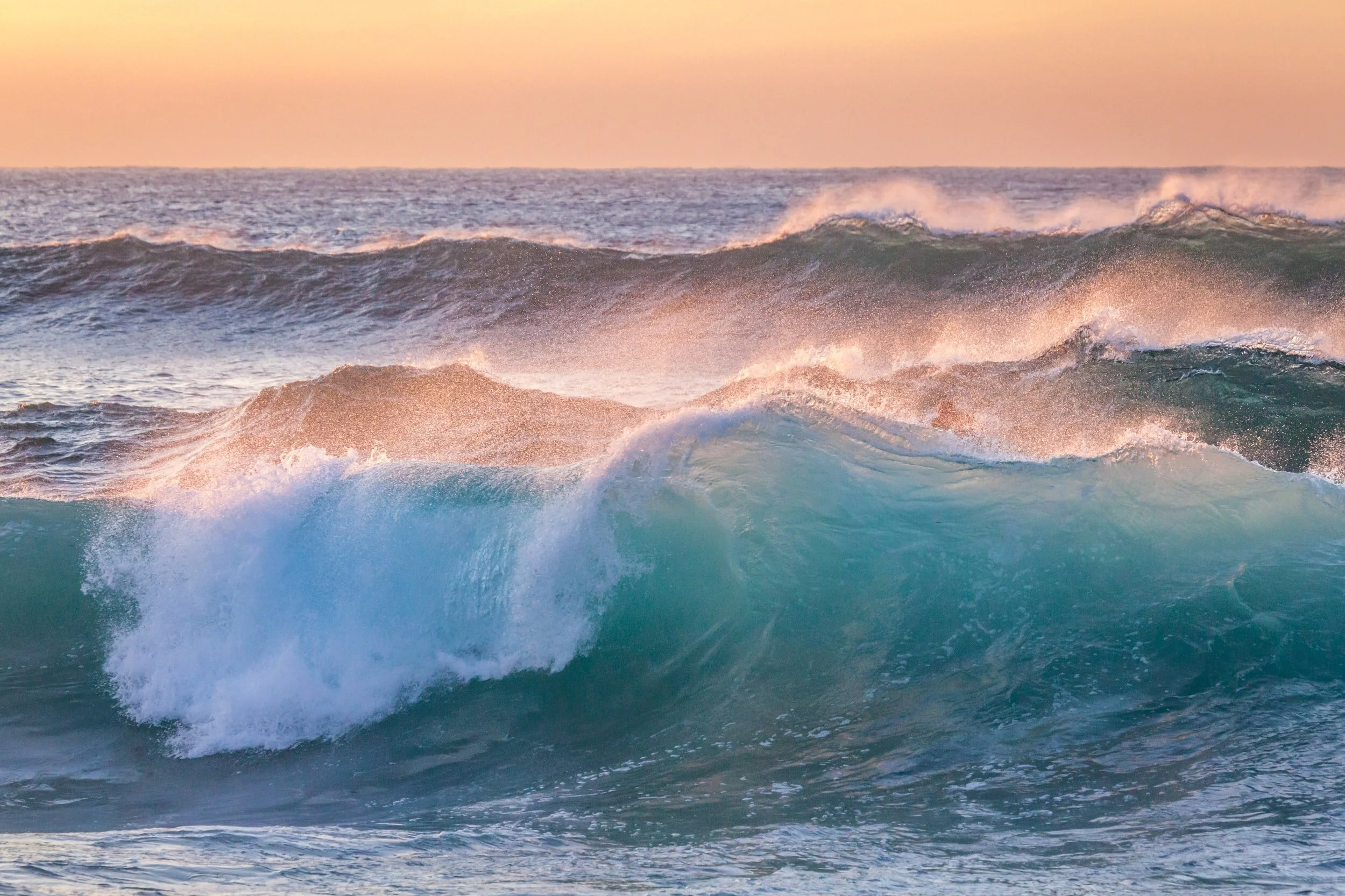
Both humans and salmon need salt in the body. In fresh water there is little salt, and the salmon must therefore save on the salt. In salt water there is too much salt. In the river, fresh water penetrates the fish through the skin, and the fish urinate a lot. In salt water, fresh water is drawn out of the fish, and it has to drink a lot. It secretes the salt through the gills and when urinating.
Kvåsveien 1500
4588 Kvås - Lyngdal
Org No. 915 380 972
The wild salmon is a part of our history and culture.
.png)